

Commercial Business Insurance in New York
Request a Quote
Please fill out the form so that someone can get back to you right away!
What business insurance means for your business
Business insurance isn’t a single policy. It’s a coverage package built around your location, employees, vehicles, contracts, and client requirements. A retailer may need a BOP and general liability, while a contractor may need workers’ comp, commercial auto, and umbrella coverage. A growing office may also need property coverage, professional liability, or cyber coverage.
One Policy Doesn’t Cover Every Business Risk
Low-cost basic policies often leave real exposures and certificate requirements unaddressed. A single policy rarely protects every part of your operation.
The Right Coverage Depends on How You Operate
Your coverage should reflect where you operate, who you employ, and what your contracts require. Here’s who typically needs this kind of coverage.
Who needs business coverage in New York
Businesses that commonly need this coverage include: contractors and home service businesses, retail stores, small offices, delivery and service-based companies, beauty and wellness businesses, professional service firms, companies with employees, businesses leasing space, and companies using cars, vans, or trucks for work.
Small Businesses
Small businesses often need a basic but properly structured insurance package that reflects their size, exposure, and landlord or client requirements.
Contractors and Trades
Contractors and home service businesses often need jobsite COIs, additional insured wording, and waivers of subrogation.
Retail, Office, and Service Companies
Retail stores and small offices may face slip-and-fall exposure, theft risk, and landlord insurance requirements. Beauty, wellness, and appointment-based businesses often have both premises liability and property exposure. Professional service firms may also need coverage that aligns with client contracts and E&O expectations.
Businesses With Employees, Vehicles, or Leased Space
Any business with employees may need workers’ compensation and, where required, New York disability benefits coverage. Businesses leasing space may need property coverage and certificate wording that satisfies lease terms. Companies using vehicles for work usually need proper commercial auto coverage. You likely need this coverage if clients or landlords request a COI, you have employees, use vehicles for work, or sign contracts with insurance requirements.
Core Coverage and Common Business Requirements
Many coverages may not be legally required, but they are often required in practice by leases, client contracts, or platforms. Having employees, vehicles, or leased space usually means higher limits, broader coverage, and additional endorsements.
Liability Requirements
Common decision factors include general liability limits, additional insured status, primary and noncontributory wording, and waiver of subrogation.
Workers’ Comp and Employee-Related Requirements
This usually includes New York workers’ compensation, disability benefits coverage when applicable, and correct payroll classifications.
Property, Vehicle, and Contract Requirements
Businesses may need commercial auto with the right symbols, property coverage for leased space, and higher umbrella limits for larger jobs. Common contract requirements often include general liability limits, workers’ compensation, commercial auto, additional insured status, certificates of insurance, waiver of subrogation, property coverage for leased space, and umbrella limits tied to job size.
What This Package Can Cover
Third-Party Injury and Property Damage
General liability can help if a customer slips and falls in your store or if your crew damages a client’s property on a job.
Employee Injuries and Job-Related Claims
Workers’ comp covers medical bills and lost wages after an on-the-job injury, along with employer liability where applicable.
Buildings, Equipment, Inventory, and Business Property
Property coverage can help with fire, theft, or water damage to equipment and inventory at your location. Inland marine coverage can follow tools and equipment in transit.
Business Vehicles and Driving-Related Risks
Commercial auto covers accidents that happen during business use, including hired and non-owned auto exposure when employees drive their own cars for work.
Large Claims Above Base Policy Limits
Umbrella or excess coverage provides higher limits when a contract requires them or when a major claim exhausts the underlying policy.
Common Gaps, Exclusions, and Costly Mistakes
Common mistakes include using a personal auto policy for business driving, carrying only basic liability, having no workers’ comp despite employees, skipping property coverage for equipment, lacking umbrella coverage for contract-heavy work, having no fast COI process, assuming liability covers your own property, and letting policies renew without review as the business grows. Warning: coverage gaps can cost far more than premiums. Review your insurance before you sign a lease, start a job, or take on new work.
Assuming General Liability Covers Everything
General liability does not cover every exposure. It may leave your own property, vehicles, equipment, and other operational risks uninsured.
Forgetting Property, Auto, or Umbrella Exposures
If you skip property, commercial auto, or umbrella coverage, you may end up exposed to claims, replacement costs, or contract failures.
Buying Limits That Don’t Match Your Contracts
Policies with low limits or missing endorsements can create compliance problems, delay jobs, or prevent you from meeting landlord and client requirements.
Why Basic Coverage May Not Be Enough
Minimum policies rarely match real-world exposure. More employees, more vehicles, and larger contracts increase both the frequency and severity of risk, and many leases require higher limits and specific endorsements. Paying less upfront can end up costing much more after a loss—or cost you the job in the first place.
Low Limits Can Fail Real-World Claims
A basic policy may technically exist, but the limit may be too low to handle an actual loss.
Contract Requirements Often Go Beyond Basic Coverage
Many contracts require more than just a starter policy. They may call for additional insured wording, higher limits, and specific endorsements.
Growing Businesses Usually Outgrow Starter Policies
As payroll, vehicles, jobs, and locations increase, insurance needs usually become broader and more complex.
How We Help Build the Right Plan
We help you review your current policy, identify missing coverage and weak limits, compare quotes from multiple carriers, match lease and contract requirements, issue certificates quickly with the right wording, and handle renewals, changes, and claims questions. Local experience matters. Our New York team understands landlord requirements, jobsite COI standards, and platform expectations, which helps keep certificates and endorsements moving with fewer delays and revisions.
Coverage Review
We look at your current setup and identify where protection is weak, incomplete, or mismatched to your operations.
Carrier Comparison
We compare multiple carrier options so you can balance cost, coverage, and contract compliance.
Certificates and Ongoing Support
We help with COIs, updates, renewals, and policy servicing after coverage is placed.
How Much Business Insurance Costs
Premiums depend on your industry, payroll, revenue, claims history, employee count, vehicles, property values, limits, deductibles, and location. Two businesses that look similar on paper can still get very different quotes based on driver records, building details, or contract-required limits. You can control cost by setting up coverage carefully: matching limits to your contracts, choosing deductibles you can afford, and separately scheduling high-value equipment when needed. Savings should come from good design, not from underinsuring the business.
What Affects Your Premium
Industry, payroll, revenue, claims history, vehicles, property, and location all shape pricing.
Why Two Similar Businesses Get Different Quotes
Even similar companies can receive different pricing because of driver history, building details, loss patterns, or required limits.
How to Lower Cost Without Dangerous Gaps
The safest way to reduce cost is to design coverage carefully, not to strip out protection your business actually needs.
Why Businesses Choose Our Agency
We combine local New York knowledge with access to multiple carriers, so you can compare options that fit both your operations and your budget. We also stay involved after the policy is issued, helping with certificates, changes, renewals, and questions as your business grows.
Local Knowledge
We understand New York insurance expectations, lease demands, and certificate wording issues.
Multi-Carrier Options
You can compare more than one carrier instead of forcing your business into a single-option solution.
Service Beyond the Sale
Support continues after binding, including service requests, changes, renewals, and certificates.
How to Get Coverage
The process is straightforward: submit basic business details, we review your operations and exposures, we compare options and explain the coverage, you choose the best fit, and we put coverage in place and issue your documents. You’ll typically need your business name, a description of operations, payroll or revenue, employee count, vehicle details, your current policy if you have one, and any contract or lease insurance requirements.
Tell Us About Your Business
We start with basic information about your operations, staff, vehicles, and insurance requirements.
Review Coverage Options
We explain the options, compare quotes, and show how each setup aligns with your exposure and paperwork needs.
Bind Coverage and Get Your Documents
Once you choose the best fit, coverage is placed and your policy documents and certificates are issued.
Frequently asked questions
Before signing a lease or client contract, review the insurance requirements carefully. Many landlords and clients require general liability, property coverage, workers’ compensation if you have employees, commercial auto if vehicles are used, specific liability limits, Additional Insured wording, Waiver of Subrogation, or umbrella coverage. A&Y Royal Insurance can review the paperwork and help match your coverage to the requirements before you commit.
General liability is often the starting point, but it does not cover every business risk. It may help with third-party injury or property damage claims, but it does not replace workers’ compensation, commercial auto, property coverage, professional liability, cyber coverage, or umbrella insurance. The right package depends on your industry, employees, location, vehicles, contracts, and property exposure.
Usually, general liability does not cover your own business property. Tools, inventory, equipment, furniture, computers, and tenant improvements may require business property coverage, inland marine coverage, or a business owners policy. This is especially important for contractors, retailers, service businesses, and companies with equipment that moves between locations.
In most cases, yes. New York generally requires employers to carry workers’ compensation coverage for employees. Your payroll, employee duties, ownership structure, and classifications should be reviewed carefully so the policy is set up correctly and your business avoids compliance problems.
In many cases, yes. Personal auto insurance may exclude or limit business use. If you or your employees use cars, vans, or trucks for deliveries, service calls, jobsite travel, client visits, or business errands, commercial auto or hired and non-owned auto coverage may be needed.
Send the insurance requirements to your broker before the deadline. COI requests may include specific limits, Additional Insured status, Primary and Noncontributory wording, Waiver of Subrogation, or umbrella limits. Reviewing the wording early helps avoid delays, rejected certificates, or last-minute policy changes.
If your certificate of insurance was rejected, do not just resend the same document. The issue may be missing wording, incorrect business name, wrong limits, missing policy type, expired dates, or an endorsement that has not been added. A&Y Royal Insurance can review the rejection reason and help correct the certificate or coverage issue when possible
Umbrella insurance may make sense when a contract requires higher limits, when your business has vehicles, employees, jobsites, customer traffic, larger projects, or higher claim exposure. It can provide extra liability limits above certain underlying policies when a covered claim exceeds the base policy limit.
Cost can often be managed by choosing appropriate deductibles, keeping payroll and vehicle information accurate, reviewing classifications, maintaining clean driver records, avoiding unnecessary coverage, and matching limits to real contract requirements. The goal is not just the lowest premium; it is a policy that protects the business and still satisfies leases, clients, and lenders.
You will usually need your legal business name, business address, description of operations, years in business, payroll or revenue, number of employees, vehicle details if applicable, property or equipment values, current policy information, claims history, and any lease or client insurance requirements.
Start Driving With Confidence Today
Get TLC-ready coverage without the hassle and get back on the road with confidence.
Submit The Full Application
- Name
- City
- Vehicle Type
- Contact
Free. No spam. Quick callback with a response within minutes.
About Our Agency
- Licensed agency serving New York drivers with compliant coverage
- Years of hands-on TLC and rideshare experience
- Geography: New York City and surrounding NY areas
- Contacts: 718-375-9000 or request a quote online for quick support
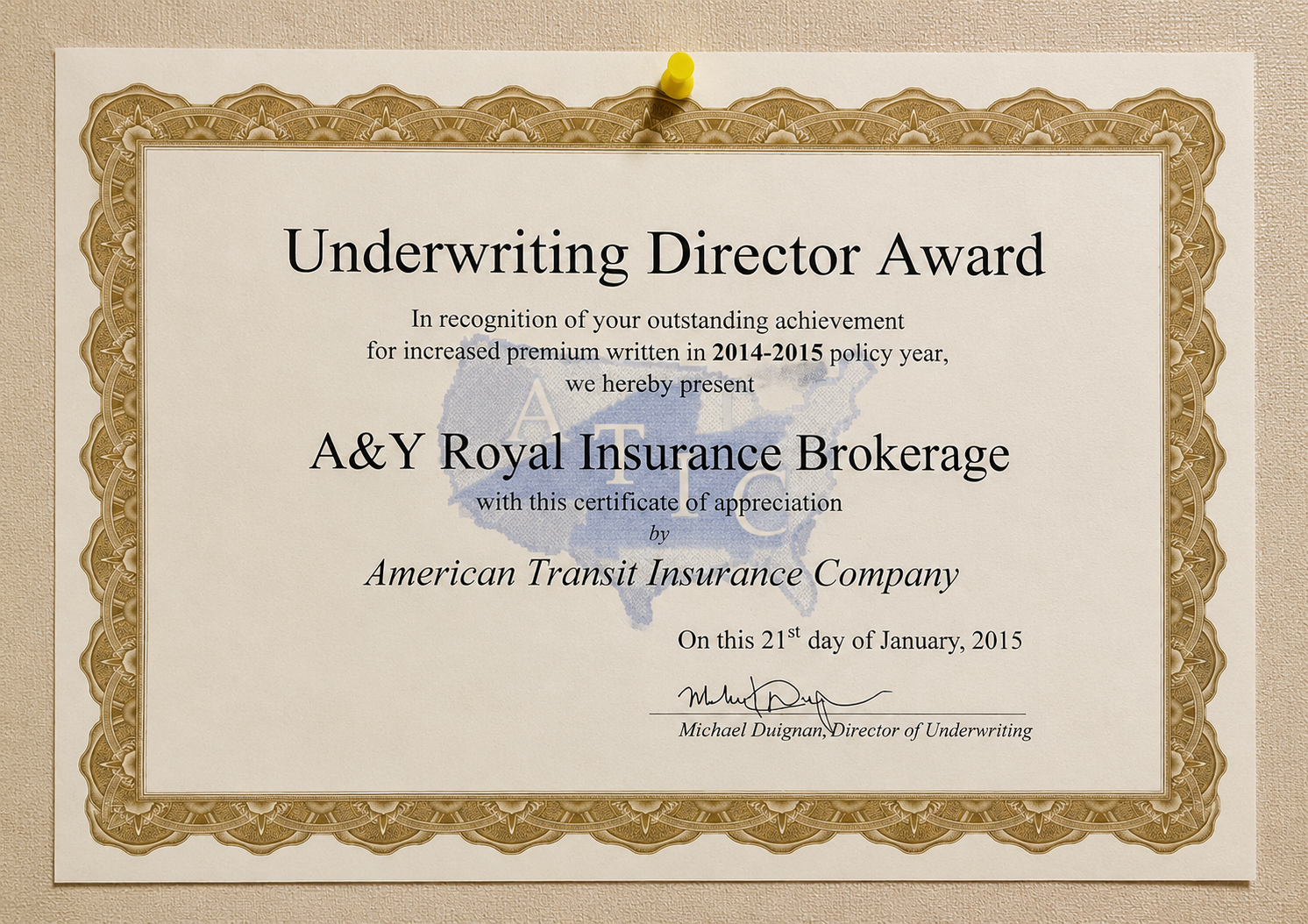
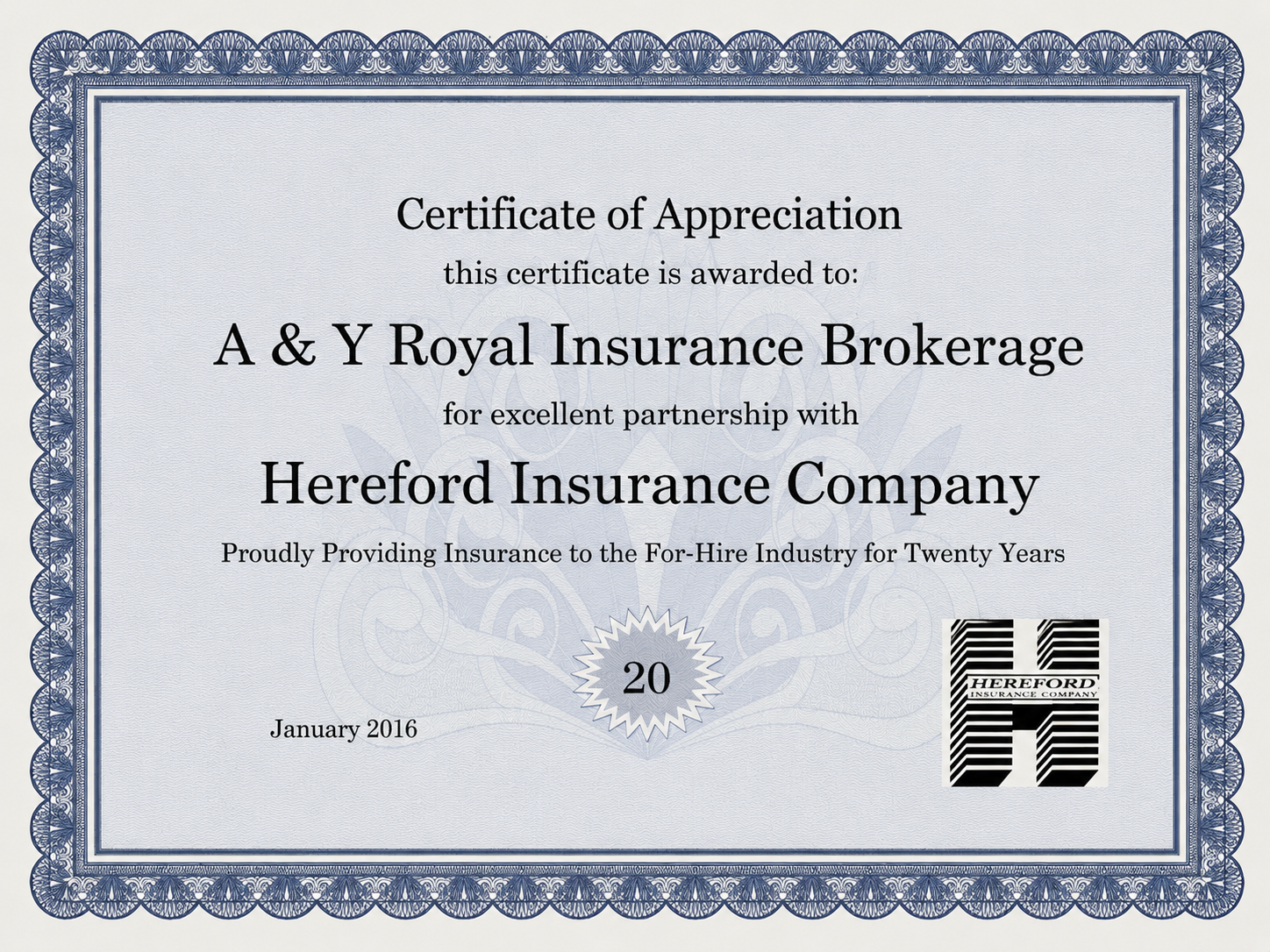
Thousands of Drivers rely on A&Y Royal Insurance
Flexible
coverage and payment options
Free Consultation
Convenient Brooklyn Location
Coverage available in many states
Work with a licensed New York insurance agency
Our team helps clients review coverage requirements, prepare documents and compare available insurance options.
How to find us
- Phone: 718 375 9000
- Email: info@ayroyal.com
- Address: 2308 Coney Island Ave, Brooklyn, NY 11223, United States
- Claims: Claims@ayroyal.com
- Auto: Auto@ayroyal.com
- Limo and taxi: info@ayroyal.com
- Commercial & homeowners: Drivers@ayroyal.com
We’ll respond during NYC business hours. If it’s urgent, a call is quickest.