

Homeowners
Insurance
in Queens, NY
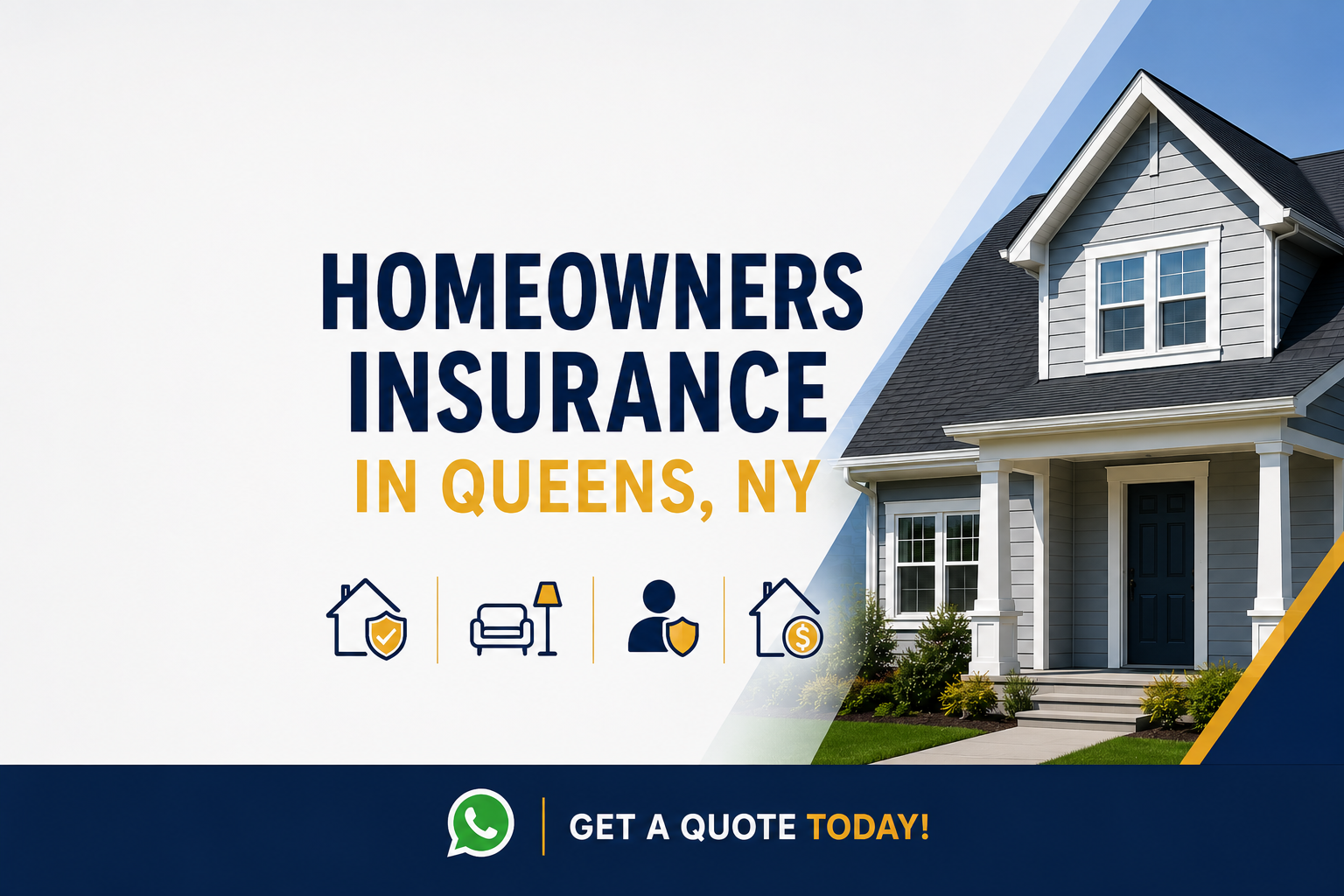
Home insurance options for Queens property owners
The right insurance setup depends not only on the property type, but also on what the owner is actually responsible for insuring under the deed, association documents, lease terms, or lender requirements.
Single-family and multi-family homes
For a single-family home, homeowners insurance may help protect the dwelling, attached and detached structures, personal property, liability exposure, and additional living expenses after a covered loss. If the home has more than one unit, the number of units, owner occupancy, and whether part of the property is rented may affect both eligibility and policy structure.
For owner-occupied two-family or three-family properties, insurers may review how the building is used, how many units are occupied by the owner, and whether any part of the property is tenant-occupied. The exact coverage options depend on the property details and insurer guidelines.
Townhouses and attached homes
Townhouses and other attached homes in Queens may require closer review because shared walls, attached structures, and association responsibilities can affect how coverage is set up. In some cases, the property may be insured more like a standalone house. In others, the owner may need coverage that works together with an HOA or another master policy.
This is one reason it is important to confirm exactly what the association covers and what remains the owner’s responsibility.
Condo units
Condo owners commonly need an HO-6 policy. This type of policy is usually designed to work alongside the condominium association’s master policy. Depending on the condo documents and the policy selected, condo insurance may help cover interior improvements, personal belongings, liability, loss assessment, and additional living expenses after a covered loss.
Because condo associations do not all insure the same interior items or owner responsibilities, the master policy should be reviewed before selecting HO-6 limits. Otherwise, the owner may assume certain improvements, fixtures, or loss assessment exposures are covered when they are not.
Co-op apartments
Co-op insurance also needs special attention. The building corporation’s insurance typically does not replace the shareholder’s own policy. A co-op policy may help protect personal property, certain interior improvements, liability, loss assessment, and temporary living expenses after a covered loss.
Board rules, proprietary lease terms, and insurer requirements may affect what kind of coverage is appropriate.


What homeowners insurance may cover
Homeowners insurance is not a single blanket promise. What it covers depends on the policy terms, limits, deductibles, exclusions, and endorsements.
Dwelling coverage
Dwelling coverage may help pay for eligible repairs or rebuilding after a covered loss involving the insured structure. For a house, this may include the home itself and attached features. The dwelling limit should generally reflect estimated rebuilding costs rather than the market value of the property.
Other structures coverage
Other structures coverage may apply to eligible detached structures on the property, such as a detached garage, fence, or shed. The available amount often depends on the policy structure and selected limits.
Personal property coverage
Personal property coverage may help cover belongings such as furniture, clothing, electronics, and household items, subject to policy limits and exclusions. Higher-value items like jewelry, artwork, collectibles, or specialty equipment may need to be scheduled separately if the owner wants broader protection.
Personal liability and medical payments
Liability coverage may help when the policyholder is legally responsible for another person’s injury or for damage to someone else’s property. Medical payments coverage is different. It may help with smaller guest injury expenses regardless of fault, subject to policy terms.
Additional living expenses
If a covered loss makes the home temporarily uninhabitable, additional living expenses coverage may help with eligible increases in living costs, such as temporary housing and certain related expenses while repairs are being completed.
Request a Quote
Please fill out the form so that someone can get back to you right away!
Coverage considerations for homes in Queens
Insurance for a home in Queens is not based on location alone. Insurers may evaluate the specific address and the characteristics of the property before offering coverage or pricing.
Important underwriting factors may include:
- the ZIP code;
- whether the home is detached, semi-attached, or attached;
- the age and condition of the building;
- roof type and roof age;
- plumbing, heating, and electrical systems;
- basement or foundation type;
- number of residential units;
- owner occupancy or tenant occupancy;
- prior insurance history;
- prior claims history;
- estimated rebuilding cost;
- proximity to coastal or flood-prone areas.
Not every property in Queens has the same risk profile. Two homes in the same borough may be evaluated very differently depending on construction, maintenance, updates, and location.
It is also important to understand that standard homeowners insurance generally does not cover external flooding. Separate flood insurance may be needed in some cases. Water backup through drains, sewers, or sump systems may also require an endorsement rather than being included automatically.
Homeowners insurance for a mortgage or home closing
If you are buying a home in Queens, insurance may need to be arranged before the closing date. In many cases, the lender will ask for proof that the property will be insured as of the effective date required for closing.
Depending on the transaction, the lender may request:
- an insurance binder;
- a declarations page;
- proof of insurance;
- appropriate dwelling limits;
- mortgagee wording;
- the lender’s loan number;
- confirmation of the policy effective date.
If the mortgagee name, loan information, or property details need to be corrected, those details should be reviewed carefully before the final documents are issued. This can help reduce delays close to the closing date.
What homeowners insurance may not cover automatically
A standard homeowners policy may exclude or limit coverage for certain types of loss. Common examples may include:
- external flooding;
- sewer or drain backup;
- earthquakes;
- gradual leaks;
- long-term moisture issues;
- mold caused by ongoing conditions;
- pest damage;
- wear and tear;
- neglected maintenance;
- certain valuable belongings;
- additional rebuilding costs caused by updated building code requirements.
Some of these risks may be addressed through a separate policy or an endorsement, depending on the insurer and property.
How much does homeowners insurance cost in Queens?
There is no single standard price for homeowners insurance in Queens. The cost depends on the property, the selected coverage, the insurer, and underwriting.
Common pricing factors may include:
- property location and ZIP code;
- home type and construction;
- year built;
- roof age and roof condition;
- plumbing and electrical updates;
- heating system;
- number of units;
- occupancy type;
- estimated dwelling replacement cost;
- liability limits;
- deductible;
- endorsements;
- prior claims history;
- safety and security systems;
- insurer underwriting requirements.
One of the most important pricing and coverage issues is that market value and rebuilding cost are not the same thing. A property may sell for more or less than it would cost to rebuild, which is why dwelling coverage should be reviewed against estimated reconstruction cost rather than purchase price alone.
Because of that, two homes with similar market prices may still receive different insurance quotes.
How to get a homeowners insurance quote in Queens
Getting a homeowners insurance quote is usually easier when the property details are prepared in advance.
Step 1: Provide property information
The applicant may need to provide:
- the property address;
- property type;
- year built;
- square footage;
- construction type;
- number of units;
- occupancy information;
- roof details;
- heating, plumbing, and electrical information.
Step 2: Share insurance and mortgage details
The quote process may also involve:
- the current or prior insurer;
- policy expiration date;
- prior claims history;
- requested effective date;
- lender or mortgagee information, if applicable.
Step 3: Review available coverage options
Once the property details are reviewed, the key task is not simply to find a price, but to compare how the available options differ in limits, deductibles, valuation terms, endorsements, and exclusions. This may include reviewing:
- dwelling limits;
- personal property limits;
- liability limits;
- deductibles;
- replacement cost terms;
- endorsements;
- exclusions;
- insurer requirements.
This step is important because the cheapest option is not always the most appropriate one. A lower premium may also mean lower limits, a different valuation method, or more restricted coverage.
Step 4: Select a policy and receive documents
After the policy is selected and approved, the insured may receive documents such as:
- a declarations page;
- an insurance binder;
- proof of insurance;
- mortgagee confirmation.
The exact document package depends on the policy stage and whether the coverage is being arranged for an upcoming closing, a refinance, or an existing home.
Why choose A&Y Royal Insurance
Choosing a homeowners policy is not only about finding a quote. It is also about matching the coverage to the property type, identifying risks that may need endorsements, and making sure the policy works for ownership, occupancy, and lender requirements.
A&Y Royal Insurance helps clients:
- review which policy structure fits the property type;
- compare quotes with attention to limits, deductibles, valuation terms, and exclusions;
- identify risks that may require endorsements rather than assuming they are included;
- prepare lender and closing documents with the correct mortgagee wording and effective date;
- review existing coverage after renovations, refinancing, or occupancy changes.
Policy availability, pricing, and eligibility remain subject to insurer underwriting.
Get a homeowners insurance quote in Queens
If you own a house, condo, townhouse, or co-op in Queens, or if you are preparing for an upcoming home closing, you can request a personalized homeowners insurance quote based on your property details.
To get started, it helps to have:
- the Queens property address;
- basic building information;
- occupancy details;
- current insurance information, if any;
- claims history;
- mortgage or closing information, if applicable.
A personalized quote can help you compare how different policy options handle limits, deductibles, endorsements, and lender-related requirements so you can choose coverage that fits the property, the ownership setup, and your priorities.
Frequently asked questions about homeowners insurance in Queens
Homeowners insurance is generally not required by New York law just because someone owns a home. However, mortgage lenders usually require it when the property secures a loan.
That depends on the property and the policy structure. The dwelling limit should generally reflect estimated rebuilding costs, while personal property and liability limits depend on the household, the owner’s risk exposure, and the selected policy.
Yes, in many cases a buyer can apply for coverage before closing. After the policy is approved and ready to be bound, the required insurance documents may be prepared for the lender.
It depends on the cause of the damage. Standard homeowners insurance generally does not cover external flooding. Sewer or drain backup may require a separate endorsement. Long-term seepage or maintenance-related issues may also be excluded.
That depends on the specific address, lender requirements, and the owner’s risk preferences. Standard homeowners insurance generally excludes external flood damage, so separate flood coverage may need to be considered.
A condo owner commonly needs an HO-6 policy. This type of policy may help cover the unit owner’s belongings, interior responsibilities, liability, loss assessment, and additional living expenses, while the association’s master policy covers other parts of the building.
In many cases, yes. A co-op shareholder may still need an individual policy because the corporation’s master policy does not necessarily cover personal belongings, interior improvements, liability, or temporary housing after a covered loss.
Coverage may be available, but the insurer will usually need to review the number of units, occupancy, rental use, and overall property condition before confirming eligibility.
Not always. Sewer or drain backup coverage may require an endorsement rather than being included automatically in the base policy.
Bundling may be available and may qualify for a discount, depending on the insurer and the policies involved.
Protect your Queens property with the right insurance
Request a homeowners insurance quote based on your property type, occupancy, coverage needs, and lender requirements. A&Y Royal Insurance can help you review available options for a house, townhouse, condo, or co-op in Queens.
Policy availability, pricing, coverage, and eligibility are subject to insurer requirements and underwriting.
Submit The Full Application
- Name
- City
- Contact
Free. No spam. Quick callback with a response within minutes.
About Our Agency
- Insurance assistance for homeowners, condo owners, co-op shareholders, and eligible multi-family property owners in New York;
- help comparing limits, deductibles, valuation terms, exclusions, and available endorsements;
- support with insurance documents for purchases, closings, refinancing, and lender requirements;
- assistance reviewing existing coverage after renovations, occupancy changes, or property updates.
- Contacts: 718-375-9000 or request a quote online for quick support
Available policies and coverage options depend on the property, insurer guidelines, and underwriting.
Thousands of Drivers rely on A&Y Royal Insurance
Flexible
coverage and payment options
Free Consultation
Convenient Brooklyn Location
Coverage available in many states
Work with a licensed New York insurance agency
Our team helps clients review coverage requirements, prepare documents and compare available insurance options.
How to find us
- Phone: 718 375 9000
- Email: info@ayroyal.com
- Address: 2308 Coney Island Ave, Brooklyn, NY 11223, United States
- Claims: Claims@ayroyal.com
- Auto: Auto@ayroyal.com
- Limo and taxi: info@ayroyal.com
- Commercial & homeowners: Drivers@ayroyal.com
We’ll respond during NYC business hours. If it’s urgent, a call is quickest.